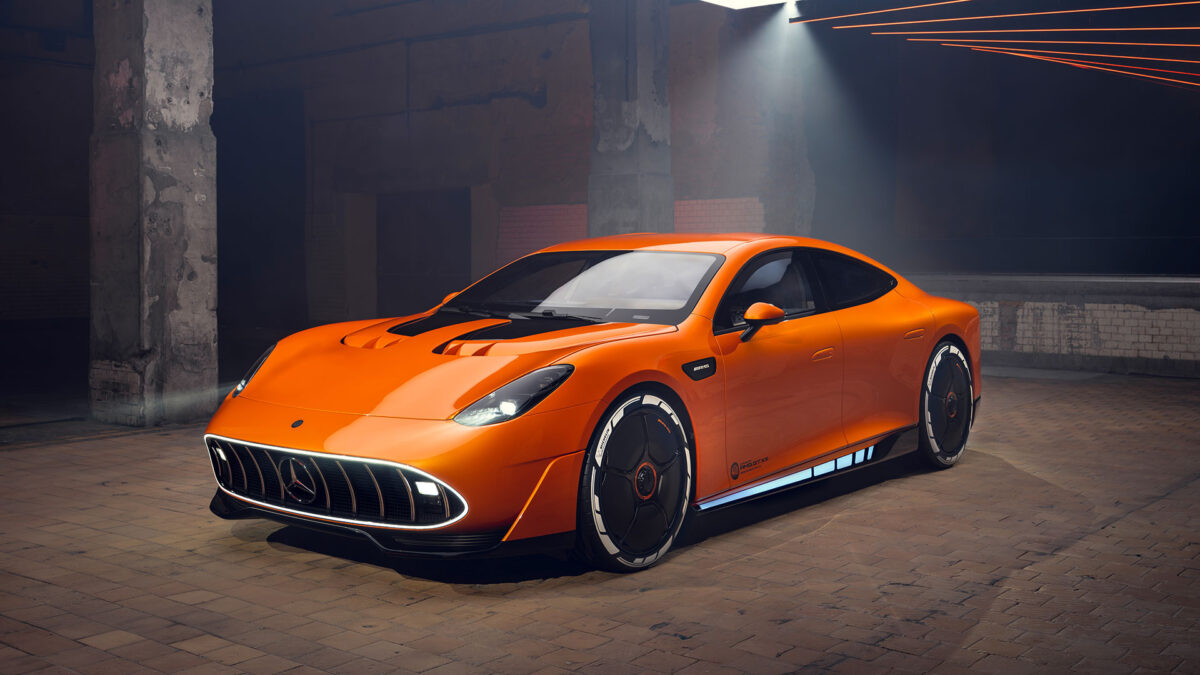
Mercedes-AMG has pulled the wraps off the Concept AMG GT XX, a rolling technology program that previews a 2026 four-door flagship built on the brand-new AMG Electric Architecture (AMG.EA). The prototype doesn’t just add electric power to an existing recipe—it reimagines every major system, from motors and battery chemistry to aerodynamics, cabin materials and even wheel construction. Nearly every component shown here, AMG says, is slated for series production.
A drivetrain unlike any other

At the heart of the GT XX are three axial-flux motors—two packaged as a dual-motor rear drive unit and one up front. Developed with British subsidiary YASA and produced at Mercedes-Benz’s Berlin-Marienfelde plant, each motor is only about 3 inches thick but delivers roughly three times the power density of a conventional radial-flux unit. The combined peak output exceeds 1,341 hp, channeled through fully variable AMG Performance 4MATIC+ all-wheel drive. AMG quotes a top speed above 223 mph and expects sub-2.5-second 0-60 sprints, yet claims the motors can repeat those bursts lap after lap thanks to exceptional continuous-power capability.
A Formula 1–inspired high-voltage battery
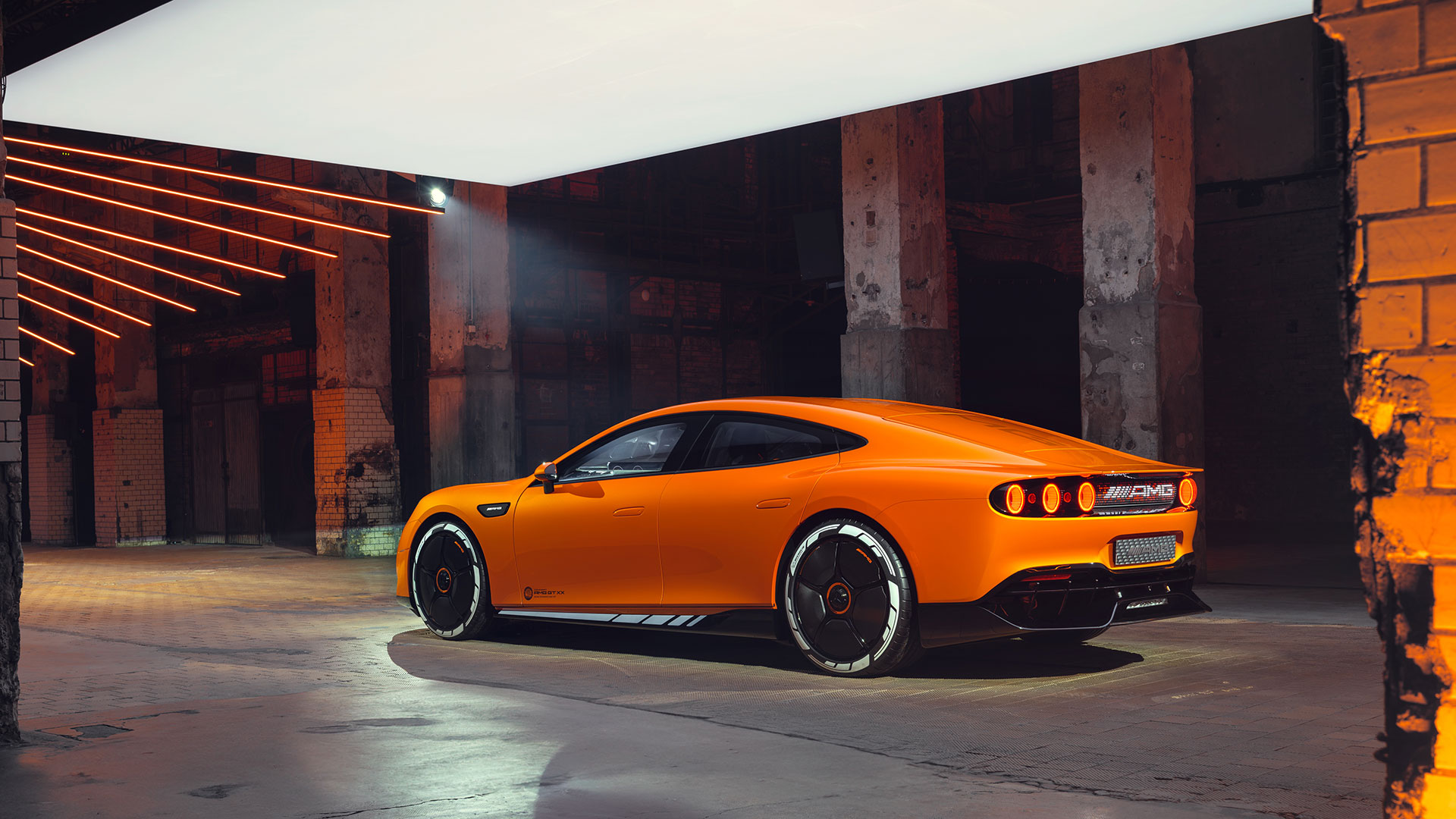
Feeding the motors is an all-new High-Performance Electric Battery (HP.EB) developed jointly by engineers in Affalterbach, the AMG High Performance Powertrains F1 group in Brixworth, and cell specialist partners. The 800-plus-volt pack uses tall, slim NCMA full-tab cylindrical cells housed in laser-welded aluminum cans; each cell is bathed in an electrically non-conductive oil coolant that holds temperatures in the sweet spot even under repeated max-power runs. AMG claims the system can accept an average 850 kW on a compatible DC fast charger, adding roughly 250 miles (400 km WLTP) in about five minutes, and it can deliver full power immediately afterward—something virtually no current EV can match.
Radical aerodynamics, active wheels and luminescent paint
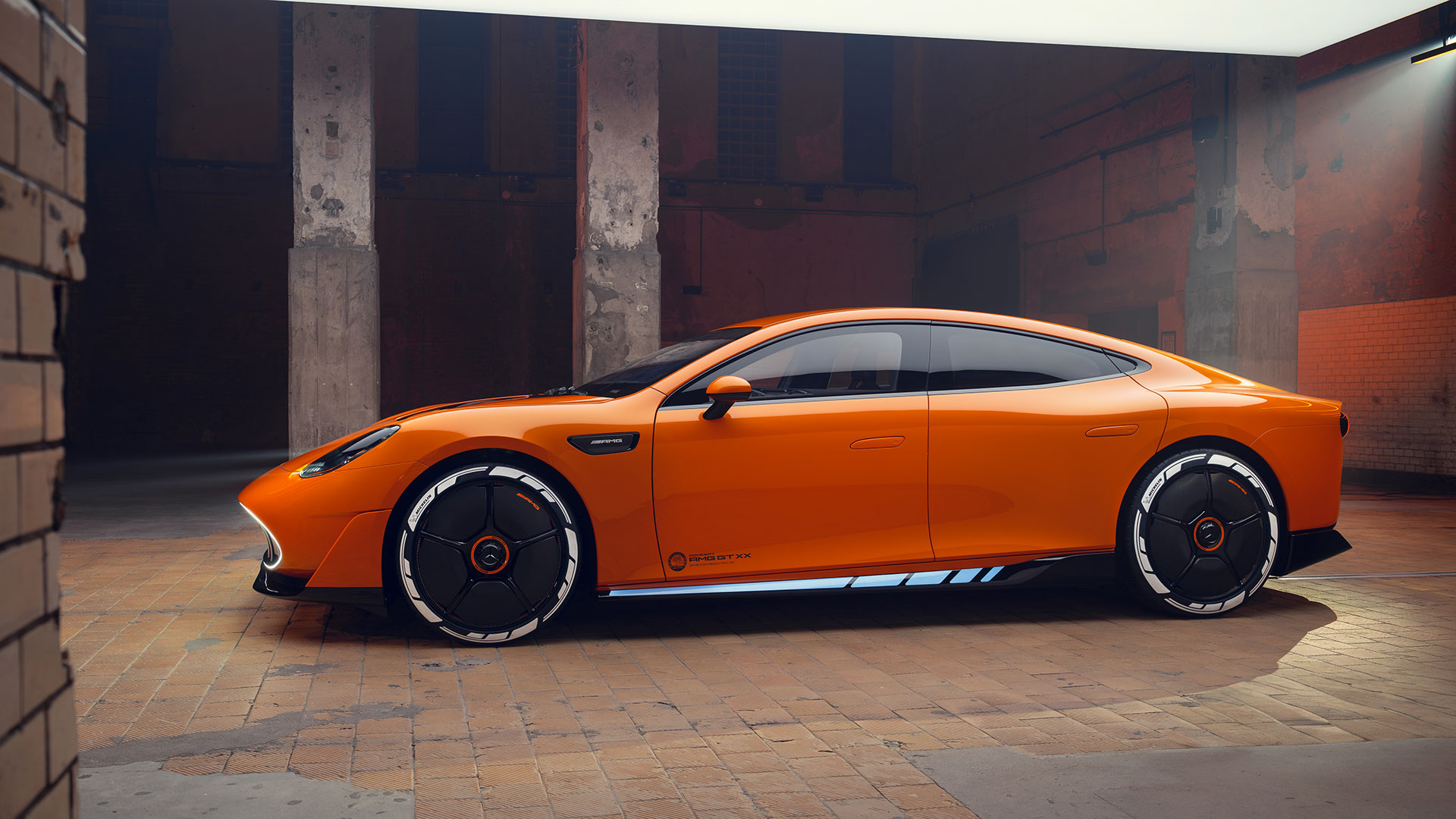
The fastback body registers a drag coefficient of just 0.198 despite 21-inch forged “Aero Wheels” that integrate a world-first: five electrically actuated blades per wheel that close flush at cruising speeds to cut drag and open on demand for brake cooling. Up front, a two-stage AIRPANEL system balances cooling and airflow, while a new Venturi-shaped underbody and a deployable rear airbrake provide high-speed stability. Even the paint is functional: electroluminescent segments along the rocker panels glow for nighttime visual drama and pulse during charging to show state of charge.
A cockpit that merges motorsport minimalism with biotech materials
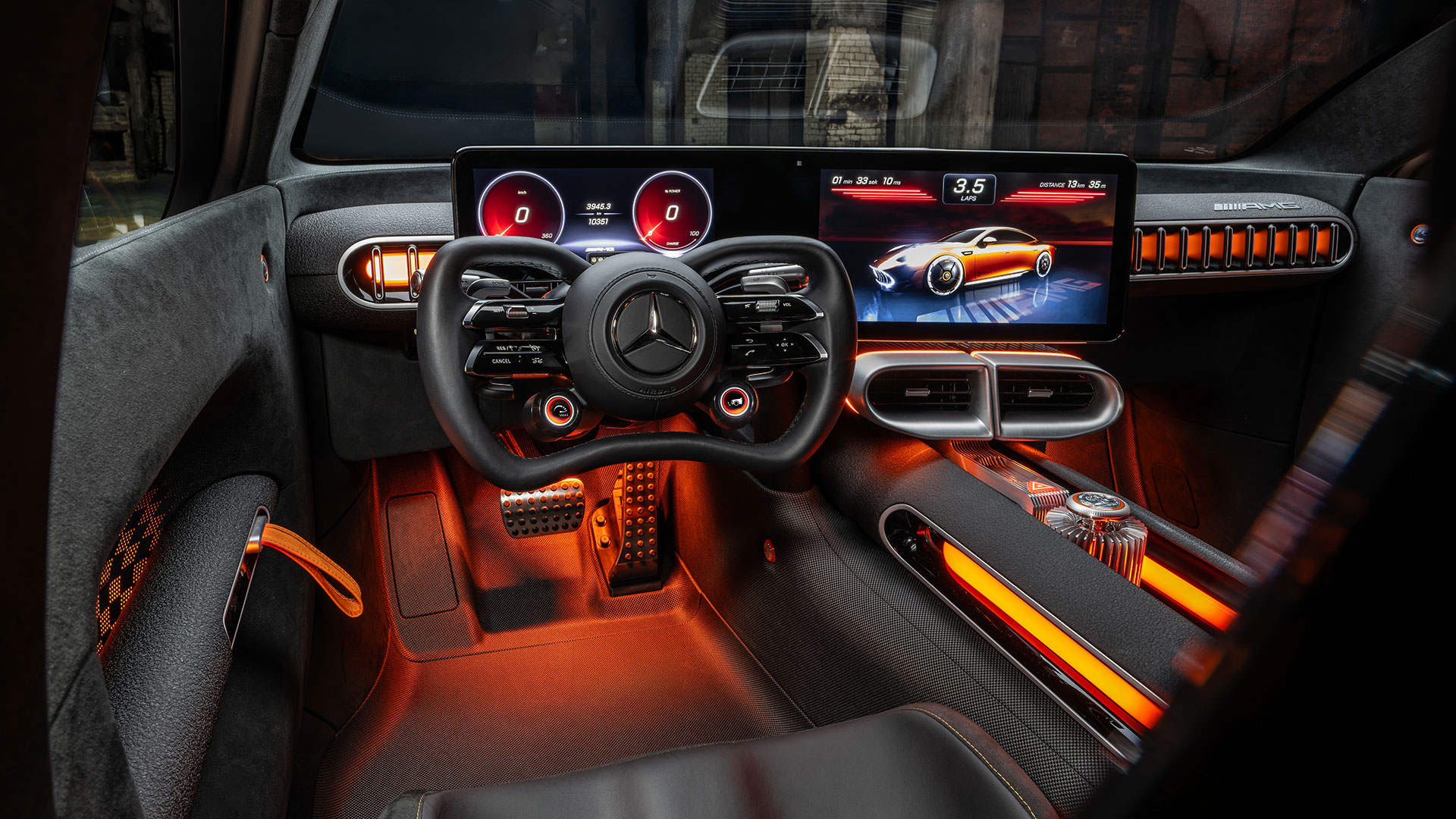
Swinging up into the 2+2 cabin reveals exposed aluminum extrusions, carbon-fiber shells and orange-glowing coolant lines that trace the center tunnel. Deep bucket seats use 3-D-printed, body-scanned pads and six-point harnesses; seat faces, door pulls and dash appliqués are wrapped in LabFiber biotech leather, created from recycled AMG GT3 racing tires, plus a bio-based silk substitute for contrast accents. Twin glass displays—a 10.25-inch cluster and a 14-inch MBUX touchscreen—run the new MB.OS software stack, while a steering-column light bar of eight LEDs flashes charge status and motor output. At the rear, an MBUX “Fluid Light Panel” of 700 RGB LEDs can display animations, logos or charge info to following traffic.
What makes it to production
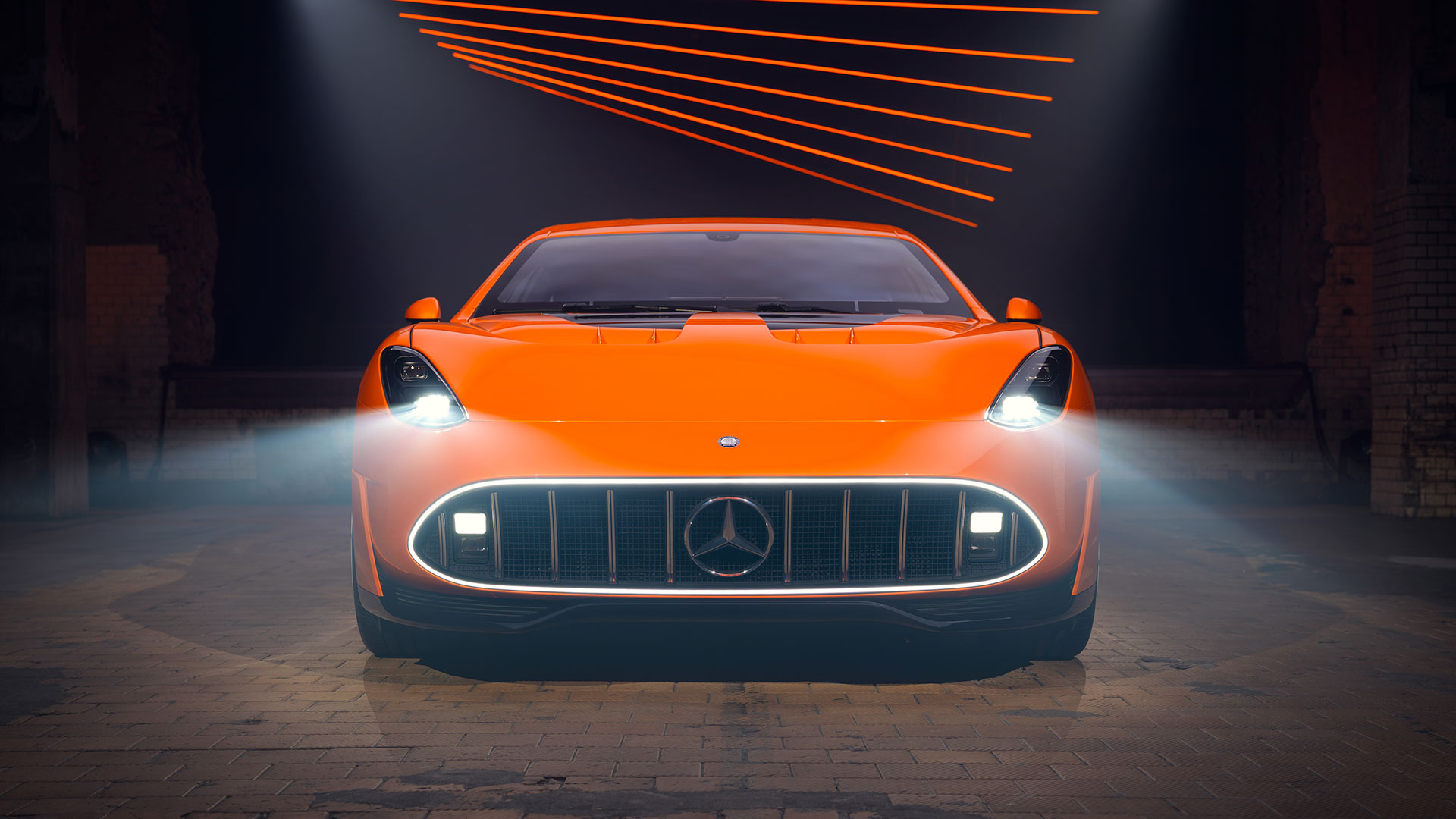
Mercedes-AMG confirms that axial-flux motors, the high-performance battery concept, 800-V/1,000-A charging hardware, the active Aero Wheels and much of the software and interior interface will debut on a road-going AMG four-door EV in 2026. The Berlin factory is already tooling up to produce the compact motors using more than 100 new processes, 35 of which are world firsts. AMG is also working with charging-station partner Alpitronic on next-generation 1,000-A CCS hardware to exploit the car’s full charge potential. While final power figures and performance targets remain under wraps, AMG executives say the production car will deliver “a new dimension of repeatable performance”—and do it on renewable, recyclable materials that push the company’s sustainability goals as aggressively as its lap times.