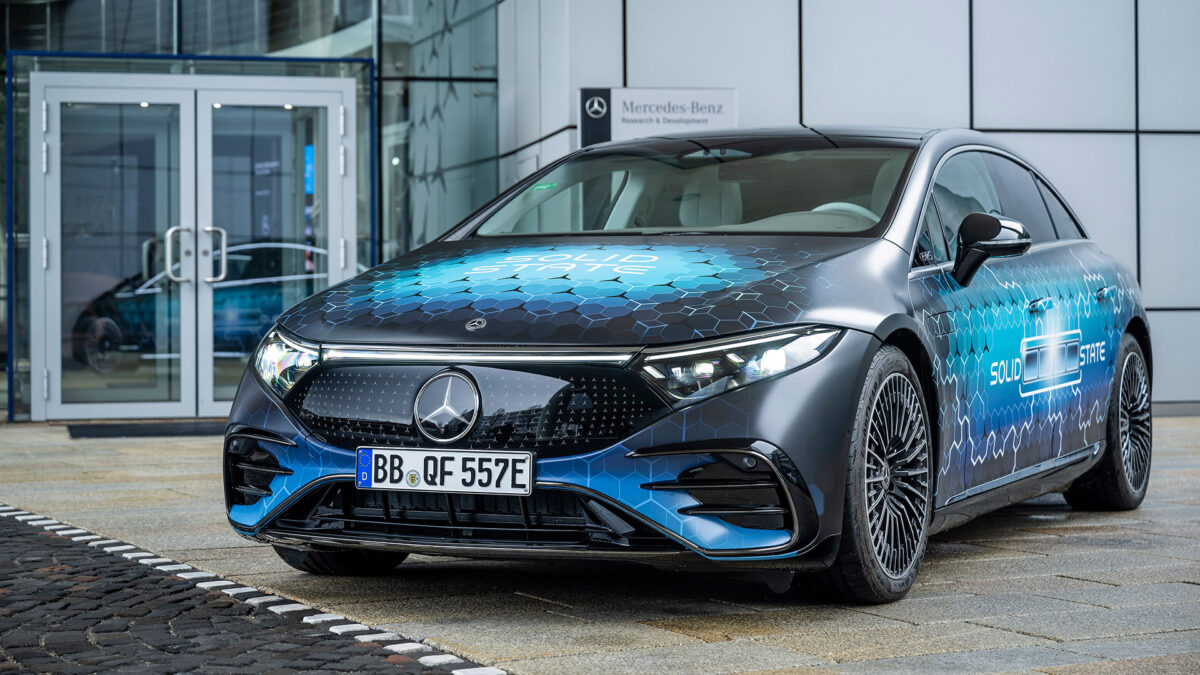
Mercedes-Benz has collaborated with Factorial Energy to develop a new solid-state battery test program, marking a significant advancement in electric vehicle technology. This initiative has led to the integration of a lithium-metal solid-state battery into a vehicle, specifically the EQS model. The Mercedes AMG High Performance Powertrains (HPP) division, which specializes in Formula 1 technologies, partnered with the Mercedes-Benz Center of Competence for Battery Systems to create this innovative battery system.
Following extensive testing on various test benches, the prototype solid-state battery was incorporated into a modified EQS at the end of 2024. This all-electric vehicle underwent adjustments to accommodate the new battery technology, which was equipped with necessary operational accessories. Initial laboratory vehicle tests were conducted in Stuttgart, paving the way for road testing that commenced in February 2025.
Markus Schäfer, a member of the Board of Management of Mercedes-Benz Group AG, said, “Developing an automotive-scale solid-state battery underlines our commitment to innovation and sustainability. We’re therefore excited to announce that we’ve started road testing with a prototype vehicle equipped with this advanced technology. We will gain crucial insights into possible series integration of this cutting-edge battery technology.”
Solid-state batteries are recognized for their potential in electric mobility due to their use of solid electrolytes, which enhance safety and enable the use of lithium metal anodes. This technology promises improved energy densities, potentially increasing gravimetric energy density for vehicle batteries up to 450 Wh/kg at the cell level. This metric is essential for assessing battery performance, particularly in weight-sensitive applications such as electric vehicles. The solid-state design not only reduces battery weight but also enhances cell safety.
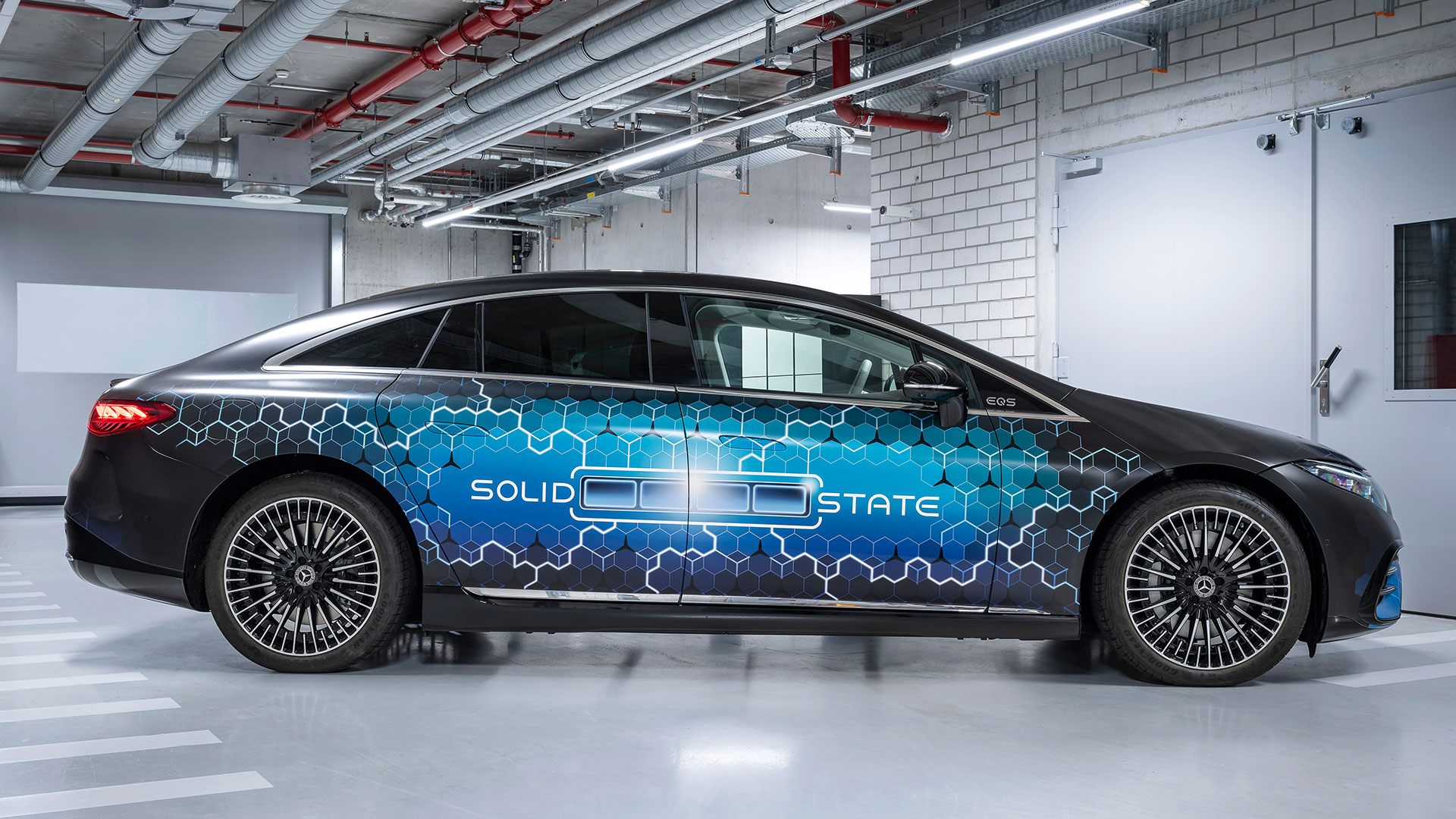
Siyu Huang, CEO and Co-Founder of Factorial Energy, added, “Being the first to successfully integrate lithium metal solid-state batteries into a production vehicle platform marks a historic achievement in electric mobility. This breakthrough demonstrates that solid-state battery technology has moved beyond the laboratory and into real-world application, setting a new benchmark for the entire automotive industry. Our collaboration with Mercedes-Benz proves that the future of electric vehicles is not just a vision, but a reality we’re delivering today.”
The solid-state battery developed by Mercedes-Benz features a unique floating cell carrier, which has received a patent. This design accommodates the expansion and contraction of materials during charging and discharging, supported by pneumatic actuators that interact with the cell’s volume changes. This innovation aims to optimize battery performance and lifespan.
The EQS-based vehicle with the solid-state battery is projected to achieve up to 25 percent more driving range compared to an equivalen standard EQS battery of the same weight and size. The development vehicle is anticipated to exceed a range of 620 miles. In comparison, the current EQS 450+ model, with a battery capacity of 118 kWh, offers a range of over 497 miles.
Mercedes-Benz plans to continue testing the solid-state battery’s performance in electric vehicles through comprehensive laboratory and road evaluations over the coming months. The partnership with Factorial, established in 2021, has been pivotal in advancing this next generation of battery technology. In mid-2024, Factorial supplied lithium-metal solid-state battery cells to Mercedes-Benz, marking a significant milestone in the development of this technology for global automotive applications.